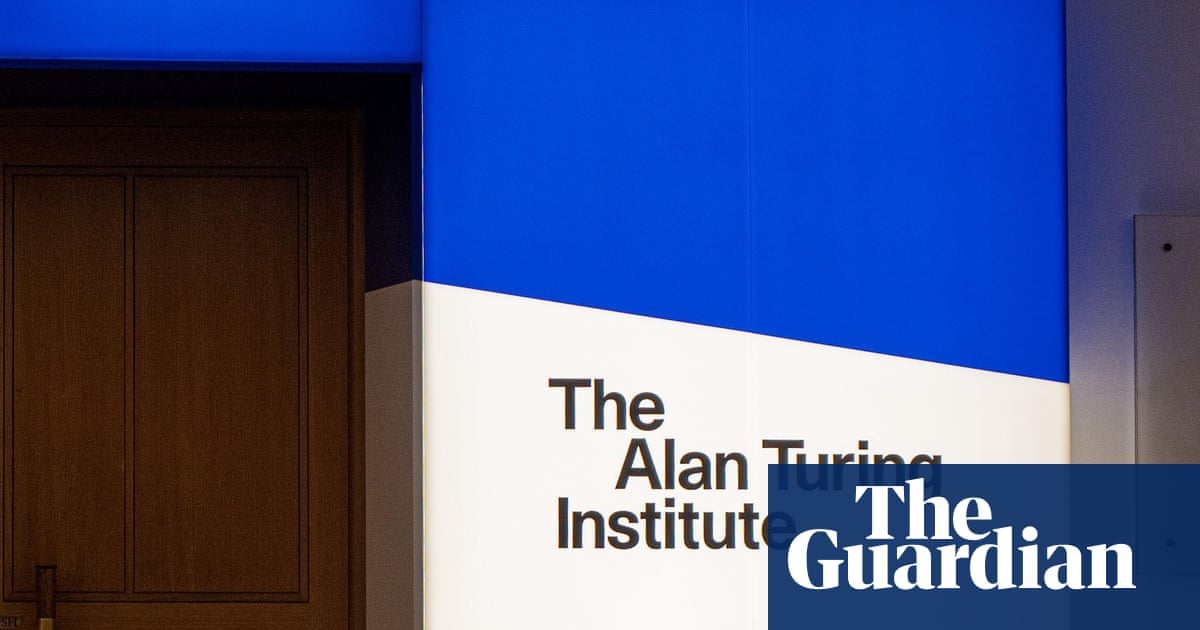
UK's Alan Turing Institute Mandated to Overhaul Strategy and Governance
Sonic Intelligence
The Gist
UK's top AI institute faces mandated strategic overhaul after underperformance review.
Explain Like I'm Five
"Imagine a big school for smart people who study computers (AI). The people who give them money (the government) looked at their report card and said, "You're smart, but you're not doing what we need you to do, and you need to be better with the money." So, they told the school to change its boss, focus more on keeping the country safe, and stop spending so much time on health and nature for now."
Deep Intelligence Analysis
The UKRI, which committed a substantial £100 million funding package to the ATI for five years starting in 2024, identified "overall strategic alignment and value for money" as unsatisfactory. This assessment followed a government directive last summer for a strategic overhaul and potential management changes. Consequently, the ATI has seen significant leadership transitions, including the departure of CEO Jean Innes in September and Chair Doug Gurr this week. The new CEO, George Williamson, brings a national security background, aligning with the government's explicit desire for the ATI to prioritize defense and national security, effectively downgrading its previous core work in health and environment.
This strategic pivot carries profound implications for the UK's AI ecosystem. While a focused mission on national security could streamline research efforts and accelerate breakthroughs in critical defense applications, it also risks narrowing the institute's broader scientific impact and potentially alienating researchers focused on other vital domains. The explicit governmental direction highlights the increasing politicization of AI research funding and the imperative for publicly funded institutions to demonstrate direct national value. Future collaborations and talent acquisition may be influenced by this sharpened focus, potentially positioning the ATI as a more specialized, state-aligned research arm rather than a broad-spectrum academic hub.
[EU AI Act Art. 50 Compliant: This analysis was generated by an AI model. Transparency and traceability are maintained.]
_Context: This intelligence report was compiled by the DailyAIWire Strategy Engine. Verified for Art. 50 Compliance._
Visual Intelligence
flowchart LR
A["UKRI Review"] --> B["Underperformance Found"]
B --> C["Strategic Overhaul Mandated"]
C --> D["Leadership Changes"]
D --> E["Focus Shift"]
E --> F["Defence Security Core"]
F --> G["New CEO Aligned"]
G --> H["Implement Recommendations"]
Auto-generated diagram · AI-interpreted flow
Impact Assessment
This signals a direct governmental intervention into a key national AI research body, shifting its strategic focus towards defense and security. It highlights the increasing national security imperative driving AI policy and funding, potentially impacting the UK's broader AI research landscape and international collaborations.
Read Full Story on TheguardianKey Details
- ● UKRI awarded Alan Turing Institute (ATI) a five-year, £100m funding package in 2024.
- ● UKRI is ATI's largest single source of funds.
- ● ATI's CEO, Jean Innes, stepped down in September; Chair, Doug Gurr, resigned this week.
- ● New CEO, George Williamson, has a national security background.
- ● Government wants ATI to focus on defence and national security, downgrading health and environment work.
Optimistic Outlook
The mandated changes could streamline the ATI's mission, ensuring its research directly aligns with critical national priorities like defense and security. This focused approach, coupled with new leadership, might enhance efficiency and deliver more tangible, strategically valuable outcomes for the UK's AI ambitions.
Pessimistic Outlook
Shifting focus away from health and environment could diminish the ATI's impact on crucial societal challenges, narrowing its research scope. The leadership turmoil and external pressure might also destabilize the institute, potentially hindering its scientific excellence and ability to attract diverse talent.

The Signal, Not
the Noise|
Join AI leaders weekly.
Unsubscribe anytime. No spam, ever.
Generated Related Signals

Federal AI Rush Echoes Past Tech Traps: Beware the 'Free Lunch'
Federal AI adoption risks repeating past tech procurement pitfalls.

AI Agents: The Unresolved Liability Crisis Threatening Enterprise Adoption
Unclear liability for AI agents automating business decisions poses significant enterprise risk.

Hungarian Election Rocked by AI Deepfakes in Political Campaign
AI-generated deepfake videos are being deployed in Hungary's election, fueling political rhetoric.

STORM Foundation Model Integrates Spatial Omics and Histology for Precision Medicine
STORM model integrates spatial transcriptomics and histology for advanced biomedical insights.
Graph Theory Explains LLM Hallucinations Through Path Reuse and Compression
Reasoning hallucinations in LLMs stem from path reuse and compression.
Optimizing LLM Training: Float32 Precision vs. Mixed Precision
Technical deep dive into LLM training precision impacts.