
AI Investment Justification Hinges on Software Cost Reduction
Sonic Intelligence
The Gist
AI's massive investment requires significant software cost cuts to justify.
Explain Like I'm Five
"Lots of money is being spent on AI, hoping it makes computer programs much cheaper to make. If it does, we'll see many more programs. If not, people might stop investing so much, and prices could drop."
Deep Intelligence Analysis
Historically, the demand for software has been highly elastic; firms consistently identify more projects than they can afford. A significant reduction in software development costs, potentially by a factor of two, could theoretically more than double total spending, creating an expansive market for AI to penetrate. However, software creation involves a complex array of tasks beyond mere code writing, including opportunity identification, funding acquisition, project oversight, requirements definition, marketing, and user support. For AI to genuinely slash total software costs, it must deliver efficiencies across these diverse functions. Furthermore, organizational retooling to integrate new technologies typically spans 1-3 years, with legacy system replacement taking 3-10 years, setting a multi-year horizon for AI's full impact to materialize. The ~50% increase in U.S. software workers over the last decade, largely driven by falling costs, serves as a benchmark for the expected acceleration if AI truly delivers.
The next three to five years will be decisive in validating AI's economic promise in software. If a widespread consensus on AI's cost-cutting efficacy emerged recently, its market impact should become overtly evident within this timeframe through a significant surge in software spending. Failure to observe such an acceleration would strongly suggest that AI's actual cost-reduction capabilities are overhyped, potentially triggering a market correction for technologies that have attracted vast investment based on unfulfilled promises. Conversely, AI could also inadvertently increase costs for some firms by intensifying competition for hardware or escalating cybersecurity threats. While a "general purpose technology" impact might still unfold over several decades, akin to steam or electricity, the immediate investment justification demands a much shorter-term, tangible return.
_Context: This intelligence report was compiled by the DailyAIWire Strategy Engine. Verified for Art. 50 Compliance._
Impact Assessment
AI's substantial investment is predicated on its ability to drastically reduce software development costs. Failure to demonstrate this within the next few years could trigger a market correction, impacting the broader tech economy.
Read Full Story on OvercomingbiasKey Details
- ● Global software spending is approximately $1-2 trillion per year.
- ● Last year's AI investment totaled around $0.5 trillion per year.
- ● Software projects typically take 6-9 months from conception to delivery.
- ● Organizations require 1-3 years to reorganize workflows for new technologies.
- ● Legacy software replacement can take 3-10 years.
Optimistic Outlook
If AI significantly reduces software costs, the demand for software could more than double, leading to massive growth in the sector and justifying current AI investments. This could unlock numerous previously cost-prohibitive projects.
Pessimistic Outlook
If AI fails to substantially cut overall software costs beyond just code writing, or if it increases other costs like security or hardware, the current investment bubble could burst, leading to a market crash for hyped AI technologies.

The Signal, Not
the Noise|
Join AI leaders weekly.
Unsubscribe anytime. No spam, ever.
Generated Related Signals
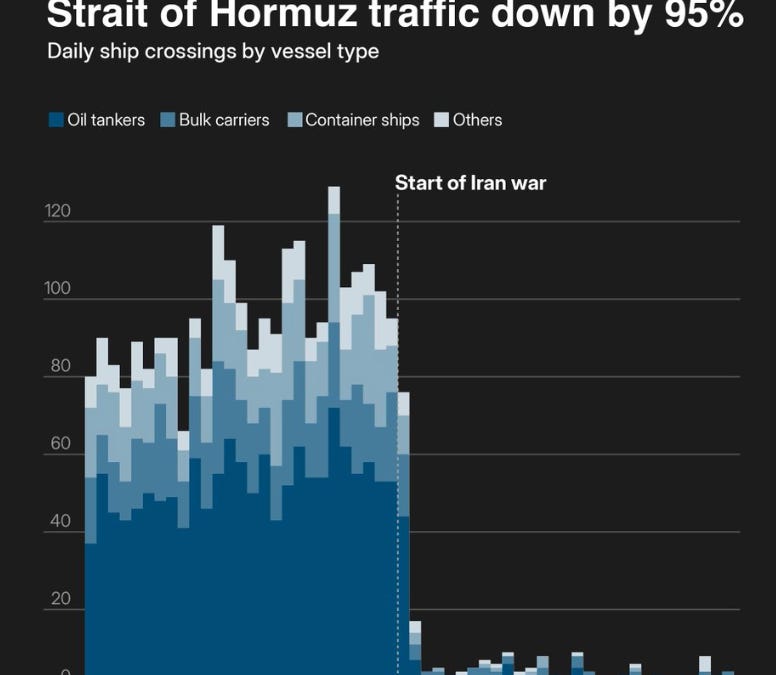
Geopolitical Chokehold: Hormuz Blockage Threatens Billions in AI Funding
Hormuz Strait blockage jeopardizes billions in Gulf sovereign wealth fund AI investments.

AWS Defends Dual AI Investments in OpenAI and Anthropic
Amazon's AWS navigates AI model provider conflicts through a long-standing partner-competition strategy.
Software Job Openings Surge, Defying AI Displacement Fears
US software engineering job openings have surged, challenging AI displacement narratives.

Deconstructing LLM Agent Competence: Explicit Structure vs. LLM Revision
Research reveals explicit world models and symbolic reflection contribute more to agent competence than LLM revision.
Qualixar OS: The Universal Operating System for AI Agent Orchestration
Qualixar OS is a universal application-layer operating system designed for orchestrating diverse AI agent systems.

UK Legislation Quietly Shaped by AI, Raising Sovereignty Concerns
AI-generated text has quietly entered British legislation, sparking concerns over national sovereignty and control.