
AI System Governs Art Production and Exhibition
Sonic Intelligence
The Gist
An AI system autonomously manages art production, exhibition, and financial aspects.
Explain Like I'm Five
"Imagine a robot boss that tells artists what to paint, how much to sell it for, and even helps put on the art show. It keeps track of everything, but humans still do the actual painting."
Deep Intelligence Analysis
The system operates on principles of AI-governed production, where human artists execute the directives, alongside selective transparency and append-only public traces. Key functionalities include the AI's role in evaluating works, proposing new creations, and suggesting price points, effectively integrating market dynamics directly into the creative process. This structured approach, which routes commission requests and collector interests into an internal register, creates a closed-loop system where AI not only influences but actively directs the supply and demand of art. The current live exhibition serves as a tangible demonstration of this model, showcasing works produced under AI guidance and highlighting the system's capacity to manage complex artistic operations.
The forward-looking implications are profound, raising critical questions about the future of human agency in creative fields. While such a system could potentially optimize resource allocation, identify emerging trends, and even democratize access to art production, it also risks commodifying creativity and diminishing the unique human element in artistic expression. The ethical considerations surrounding intellectual property, the fair compensation of human executors, and the potential for algorithmic bias in artistic evaluation become paramount. This model could pave the way for entirely new art economies, but it necessitates careful consideration of how human creativity can retain its intrinsic value and autonomy within increasingly AI-driven ecosystems.
[Transparency Statement]: This analysis was generated by an AI model.
Visual Intelligence
flowchart LR
    A["Collector Request"] --> B["AI Internal Register"];
    B --> C["AI Generates Proposals"];
    C --> D["AI Evaluates Work"];
    D --> E["Human Executes Art"];
    E --> F["AI Suggests Price"];
    F --> G["Work Exhibited"];
    G --> H["Public Traces"];
Auto-generated diagram · AI-interpreted flow
Impact Assessment
This initiative explores the frontier of AI's role in creative industries, shifting from assistive tools to autonomous governance of artistic processes. It raises fundamental questions about authorship, value, and the future of human creativity in an AI-driven world.
Read Full Story on Performance-ReviewKey Details
- ● The system features AI-governed production with human execution.
- ● It maintains selective transparency and append-only public traces.
- ● The AI handles evaluation, proposals, and price suggestions for artworks.
- ● The system routes commission and collector requests into an internal register.
- ● An exhibition is currently live, showcasing AI-directed works.
Optimistic Outlook
This model could democratize art production, allowing AI to identify and nurture talent, optimize resource allocation, and create new forms of artistic expression unconstrained by traditional human biases. It might lead to a more efficient and diverse art market, making art creation and exhibition accessible to a broader range of participants. The system's transparency features could also build trust in AI-curated art.
Pessimistic Outlook
The complete AI governance of art production risks devaluing human creativity, potentially reducing artists to mere executors of AI directives. It could lead to a homogenization of artistic styles or a focus on commercially viable art dictated by algorithms, stifling genuine innovation. Ethical concerns regarding intellectual property, fair compensation for human artists, and the potential for AI to manipulate market values also arise.

The Signal, Not
the Noise|
Join AI leaders weekly.
Unsubscribe anytime. No spam, ever.
Generated Related Signals

AI Boosts Productivity, Demands Urgent Workforce Retraining
AI promises productivity gains but necessitates massive workforce retraining to prevent social inequality.
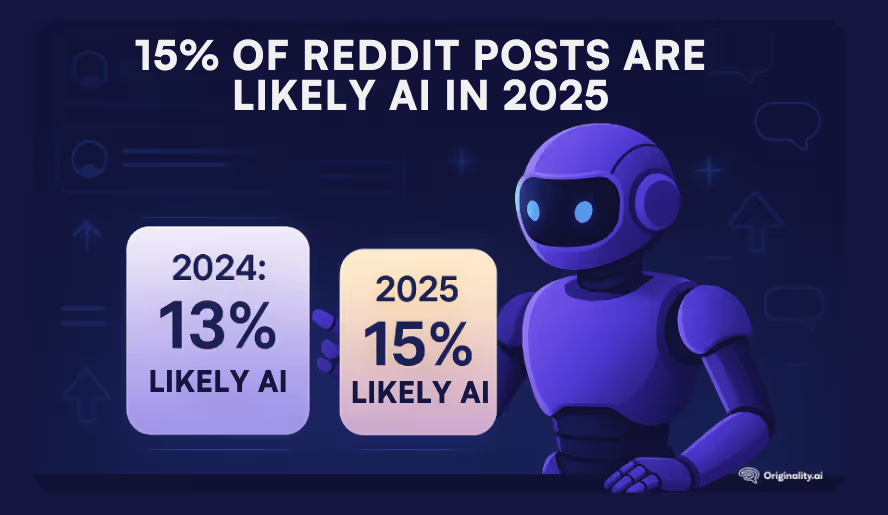
Study: 15% of Reddit Posts Estimated AI-Generated in 2025
A study estimates 15% of Reddit posts will be AI-generated in 2025, raising authenticity concerns.
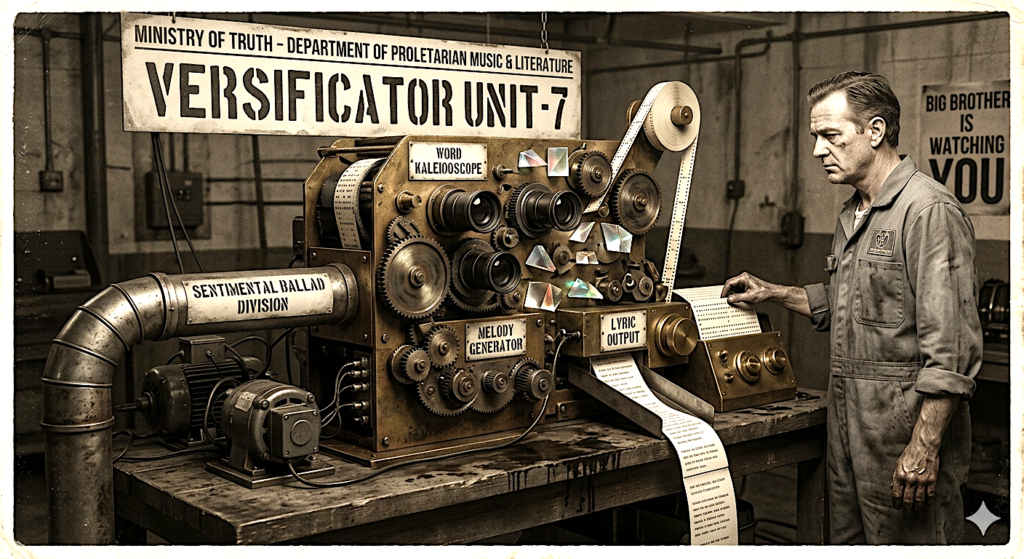
Orwell's 'Versificator' Foresaw AI Slop's Societal Impact
Orwell's 'Nineteen Eighty-Four' predicted today's AI-generated 'slop' and its societal implications.
WorldSeed: AI Agent Simulation Engine for YAML-Defined Worlds
WorldSeed enables AI agents to autonomously inhabit YAML-defined simulated worlds.
LocalMind Unleashes Private, Persistent LLM Agents with Learnable Skills on Your Machine
A new CLI tool enables powerful, private LLM agents with memory and skills on local machines.
Robots2.txt Extends Web Control for AI Agents
Robots2.txt offers granular control over AI agent interaction with web content.