Dataland: World's First AI Art Museum Opens in Los Angeles
Sonic Intelligence
The world's first AI art museum, Dataland, opens in Los Angeles.
Explain Like I'm Five
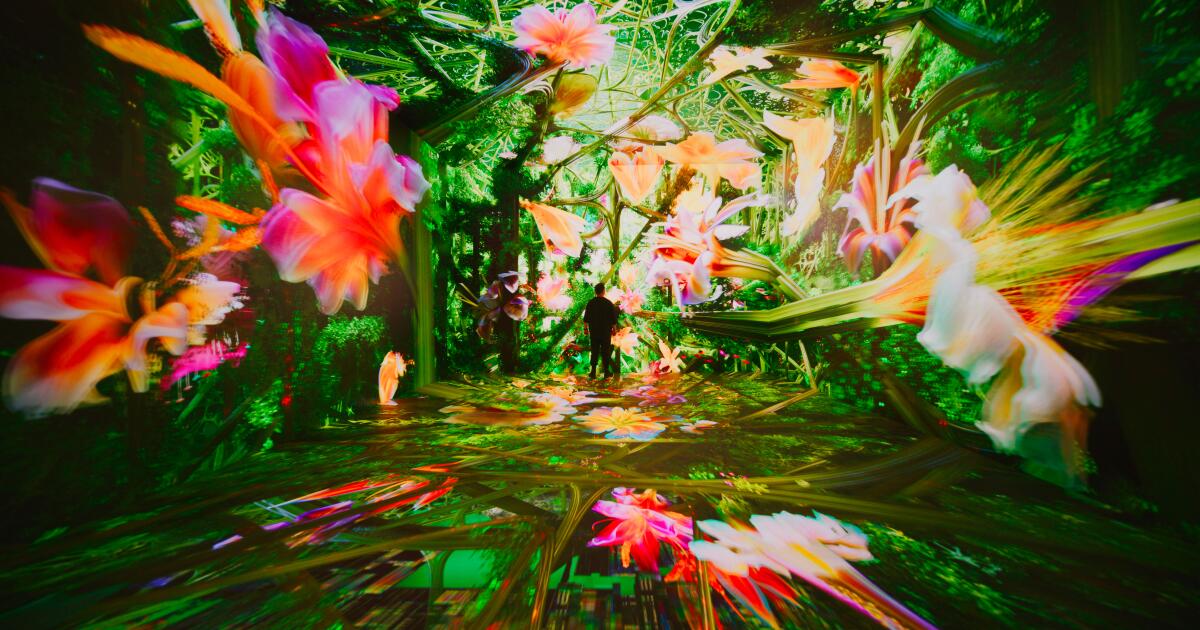
"Imagine a special new museum opening where all the art is made by super-smart computers, not just people! It's called Dataland, and it's in Los Angeles. The computers learn from huge amounts of nature pictures to create amazing, colorful shows that make you feel like you're in a rainforest. The people who made it want everyone to see how cool computers can be at making art, and they're even trying to make sure the computers don't use too much electricity."
Deep Intelligence Analysis
The museum's operational framework highlights key technical and ethical considerations within the AI art landscape. Spanning 35,000 square feet, Dataland dedicates substantial space to both public engagement and the underlying technological infrastructure. Its core artistic engine is the open-access Large Nature Model, developed by Anadol's studio, which aggregates vast datasets from prestigious institutions like the Smithsonian and the Cornell Lab of Ornithology. This commitment to transparent data sourcing, where the model does not utilize unpermitted content, addresses a significant ethical concern in AI art generation. Furthermore, the museum's sustainability efforts, hosting its model on Google Cloud servers in Oregon that leverage 87% carbon-free energy, directly confronts the substantial carbon footprint associated with large-scale AI operations, setting a precedent for environmental responsibility in the sector.
Looking forward, Dataland's existence will inevitably catalyze broader discussions on the future of art, technology, and human-machine collaboration. Its immersive galleries, exemplified by the inaugural “Machine Dreams: Rainforest” exhibition, aim to bridge the gap between digital abstraction and sensory experience, potentially redefining public interaction with art. The museum's role in collecting and preserving AI art also establishes a nascent canon for this emerging field, influencing future artistic practices and academic discourse. As AI capabilities continue to expand, Dataland serves as a crucial public forum for exploring the transformative potential and inherent responsibilities that accompany artificial intelligence as a creative force, shaping both artistic expression and societal understanding.
Impact Assessment
The opening of Dataland marks a significant cultural milestone, institutionalizing AI art and providing a dedicated public space for its exploration. This development legitimizes AI as a creative medium and offers a platform for broad public engagement with machine-generated artistic expressions.
Key Details
- Dataland, co-founded by Refik Anadol and Efsun Erkılıç, opens June 20.
- Located in the $1-billion Frank Gehry-designed Grand LA complex in downtown Los Angeles.
- Its inaugural exhibition, “Machine Dreams: Rainforest,” is by Refik Anadol Studio.
- The 35,000-square-foot museum dedicates 25,000 sq ft to public space and 10,000 sq ft to in-house technology.
- Powered by the open-access Large Nature Model, which sources data from institutions like the Smithsonian and London's Natural History Museum.
- The museum's Google Cloud servers in Oregon utilize 87% carbon-free, renewable energy.
Optimistic Outlook
Dataland's establishment could accelerate the mainstream acceptance and appreciation of AI as a legitimate artistic tool, fostering innovation and interdisciplinary collaboration. Its commitment to open-access models and data transparency sets a positive precedent for ethical development within the AI art community, potentially inspiring new forms of creative expression and public discourse.
Pessimistic Outlook
Despite its innovative approach, Dataland faces challenges in defining and preserving AI art within traditional museum frameworks, potentially sparking debates over authorship and the role of human creativity. The inherent energy demands of AI models, even with sustainability efforts, could remain a point of contention as the field scales, raising questions about the long-term environmental impact of such institutions.
Get the next signal in your inbox.
One concise weekly briefing with direct source links, fast analysis, and no inbox clutter.
More reporting around this signal.
Related coverage selected to keep the thread going without dropping you into another card wall.