
Enterprise AI Adoption: Bottom-Up Empowerment vs. Top-Down Competence Centers
Sonic Intelligence
The Gist
Enterprises deploy AI via bottom-up empowerment or top-down competence centers.
Explain Like I'm Five
"Imagine you want to teach a robot to help around the office. One way is to let everyone teach their own robot little tricks (bottom-up). Another way is to have a special team of robot experts teach all the robots big, smart things (top-down). Both ways can work, but you need to make sure the robots don't get too complicated or confuse people."
Deep Intelligence Analysis
This dichotomy highlights a critical tension between 'patchwork automation' and 'hyper-automation,' where the objective is to leverage AI without overwhelming human operators or creating unmanageable complexity. Key observations underscore this challenge, noting that dashboards can often overload humans rather than assist, and that AI's most effective use may be in predicting high-risk areas to optimize limited resources. The Skolkovo Research highlights the importance of 'Distributed Cognition,' where components possess local memory and autonomy, and identifies three decision-making types—expert-driven, process-driven, and data-driven—each with distinct niches, cautioning against the infallibility of data-driven methods. The 'Cognitive Distance' triangle between business, management, and developers further illustrates the need for mediation, where AI or architectural artifacts can bridge understanding gaps.
Forward-looking implications suggest that successful enterprise AI development, as outlined by Skolkovo and SberService, necessitates a structured approach: identifying mature processes, defining clear metrics and 'Data Stories,' developing modular prototypes, and then scaling with continuous monitoring. The recommended 90-day prototype testing period underscores the need for agile validation. Ultimately, architecture serves as a crucial 'bridge' between human and AI systems, echoing its role in cognitive distance reduction. The application of Technology and Manufacturing Process Readiness Levels (TRL and MRL) offers a robust framework for identifying innovation opportunities, ensuring that AI initiatives are grounded in operational reality and strategic foresight.
Visual Intelligence
flowchart LR
    A["Locate Mature Processes"] --> B["Define Metrics Data Story"]
    B --> C["Develop Prototypes Modules"]
    C --> D["Scale Monitor"]
Auto-generated diagram · AI-interpreted flow
Impact Assessment
The choice between decentralized, human-centric AI integration and centralized, expert-led adoption dictates an enterprise's agility, scalability, and risk management. Effective strategy prevents 'hyper-automation' while ensuring robust knowledge sharing and rapid validation cycles.
Read Full Story on NewsKey Details
- ● Tom Tailor uses a bottom-up 'digital ecosystem' approach, validating processes in 1.5 months.
- ● Unirusgroup employs a top-down 'competence center' model for AI expertise and scaling.
- ● Skolkovo/SberService recommends 90 days for prototype testing in enterprise AI development.
- ● Distributed cognition model suggests all AI components possess local memory and autonomy.
- ● Decision-making types include expert-driven, process-driven, and data-driven, each with specific applications.
Optimistic Outlook
Structured AI adoption, whether bottom-up or top-down, promises enhanced operational efficiency and resource optimization. By carefully defining metrics and mature processes, companies can rapidly prototype and scale AI solutions, fostering innovation and competitive advantage.
Pessimistic Outlook
Without a clear architectural bridge between humans and AI, or a balanced approach to stakeholder 'Cognitive Distance,' AI projects risk failure. Over-reliance on dashboards can lead to human overload, while unchecked 'hyper-automation' may create unmanageable complexity and system fragility.

The Signal, Not
the Noise|
Join AI leaders weekly.
Unsubscribe anytime. No spam, ever.
Generated Related Signals

AI Boosts Code Output But Triples Coordination Burden, Not Problem Solving
AI increases individual coding output but exacerbates coordination bottlenecks in software engineering.

AI Investment Justification Hinges on Software Cost Reduction
AI's massive investment requires significant software cost cuts to justify.
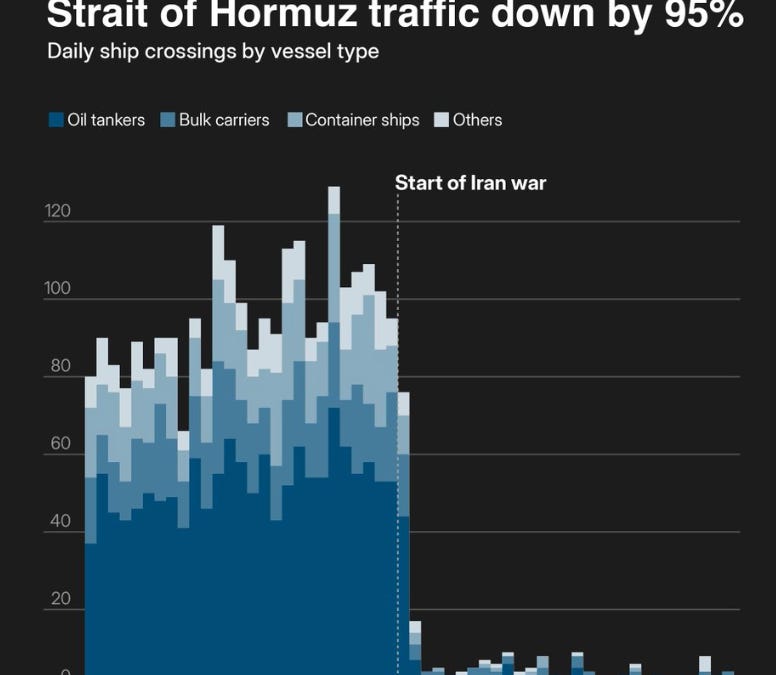
Geopolitical Chokehold: Hormuz Blockage Threatens Billions in AI Funding
Hormuz Strait blockage jeopardizes billions in Gulf sovereign wealth fund AI investments.

AI Challenges Human Self-Esteem and Domain Identity
AI's capabilities force a re-evaluation of human self-worth and identity tied to domain-specific skills.
AI Transforms Data Analysis Workflows for Lean Teams
AI coding tools are revolutionizing data analysis, enabling lean teams to achieve high productivity.

QVAC SDK Launches Universal JavaScript Kit for Local AI Applications
QVAC SDK offers a universal JavaScript/TypeScript solution for local-first AI app development.