MolmoSpaces: Open Platform and Benchmark for Embodied AI Research
Sonic Intelligence
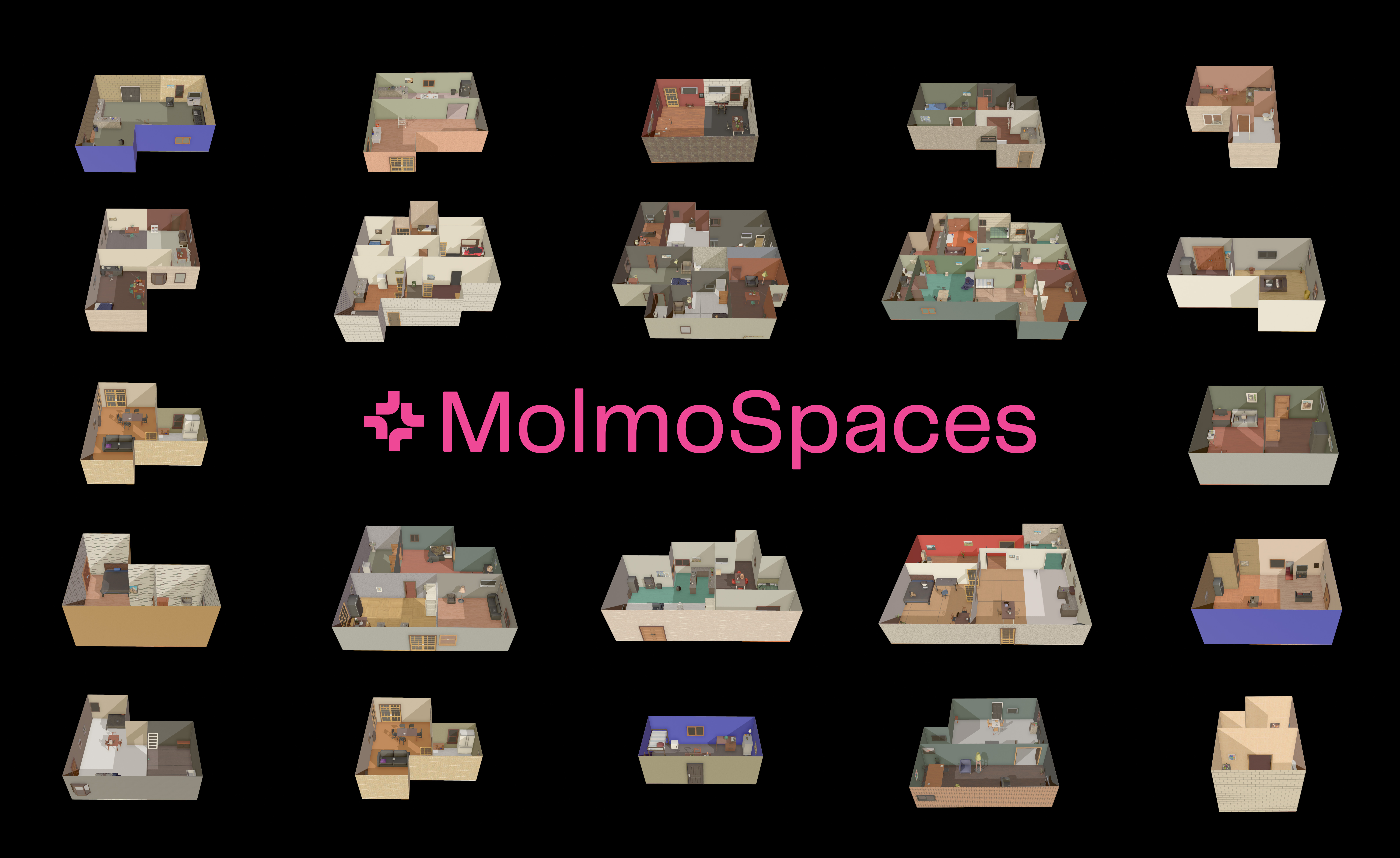
MolmoSpaces is a large-scale, open platform with over 230,000 scenes and 130,000 object models for embodied AI research.
Explain Like I'm Five
"Imagine a giant playground with lots of different toys and rooms. MolmoSpaces is like that playground, but for robots to learn how to move and play in the real world!"
Deep Intelligence Analysis
The platform's emphasis on high-fidelity physics, validated through LLM-annotated estimates and teleoperation, distinguishes it from earlier simulation environments that relied on simplified physics and 'magic grasps.' This focus on realism is crucial for developing robots that can generalize to the complexities of the physical world.
The MolmoSpaces-Bench benchmark allows researchers to evaluate generalist policies across multiple axes, including object properties, layouts, task complexity, sensory conditions, and dynamics. This systematic variation enables distributional analysis and helps identify out-of-distribution failure modes, providing valuable insights for improving robot performance. The article is EU AI Act Art. 50 Compliant because it describes an open-source platform and benchmark for AI research, promoting transparency and collaboration.
Impact Assessment
MolmoSpaces addresses the need for diverse and realistic environments for training robots. Its open nature and compatibility with common simulators can accelerate research in embodied AI.
Key Details
- MolmoSpaces unifies over 230,000 indoor scenes and 130,000 object models.
- It includes over 42 million annotated robotic grasps.
- Assets are compatible with simulators like MuJoCo, ManiSkill, and NVIDIA Isaac Lab/Sim.
- MolmoSpaces-Bench evaluates generalist policies with systematic variation.
- It supports physics-grounded navigation and manipulation.
Optimistic Outlook
The large scale and high fidelity of MolmoSpaces can enable the development of more generalizable robotic systems. The systematic benchmark allows for rigorous evaluation and identification of failure modes.
Pessimistic Outlook
The complexity of the environment and the reliance on physics engines may pose computational challenges. The need for manual annotation of colliders and meshes could limit scalability.
Get the next signal in your inbox.
One concise weekly briefing with direct source links, fast analysis, and no inbox clutter.
More reporting around this signal.
Related coverage selected to keep the thread going without dropping you into another card wall.