
AI Revolutionizes Academic Peer Review at Scale
Sonic Intelligence
The Gist
AI reviews outperform humans in large-scale academic pilot.
Explain Like I'm Five
"Imagine a super-smart robot that can read all your homework faster and better than your teacher, giving you really helpful tips. That's what a new computer program did for thousands of science papers, and the scientists actually liked the robot's feedback more!"
Deep Intelligence Analysis
The system, leveraging frontier models, tool use, and integrated safeguards, processed an unprecedented 22,977 full-review papers in under 24 hours. Crucially, a large-scale survey revealed that both authors and program committee members expressed a preference for the AI-generated reviews, citing superior technical accuracy and more actionable research suggestions compared to human counterparts. This empirical validation, coupled with the AI system's demonstrated ability to substantially outperform simpler LLM baselines in identifying scientific weaknesses, underscores the robustness and sophistication of the deployed solution. It moves beyond theoretical potential, showcasing tangible, measurable improvements in a high-stakes academic environment.
Looking forward, these results pave the way for a new generation of synergistic human-AI teaming in research evaluation. Rather than replacing human oversight entirely, AI can serve as a powerful force multiplier, handling the initial heavy lifting of review generation and flagging critical issues, thereby allowing human experts to focus on deeper conceptual insights and ethical considerations. This hybrid model promises to enhance the overall quality, consistency, and timeliness of scientific peer review, ensuring that groundbreaking research is identified and validated more efficiently, while simultaneously freeing up valuable human intellectual capital for more complex, creative tasks.
Impact Assessment
The successful, large-scale deployment of AI in peer review signals a fundamental shift in academic publishing. This innovation addresses the growing strain on human reviewers, promising enhanced quality, consistency, and speed in evaluating scientific research.
Read Full Story on ArXiv cs.AIKey Details
- ● AAAI-26 deployed AI-assisted peer review for all main-track submissions.
- ● The AI system reviewed 22,977 full-review papers.
- ● Review generation was completed in less than one day.
- ● Participants preferred AI reviews over human reviews for technical accuracy and research suggestions.
- ● The AI system substantially outperformed a simple LLM baseline in detecting scientific weaknesses.
Optimistic Outlook
This pilot demonstrates AI's immediate potential to alleviate bottlenecks in scientific publishing, accelerating knowledge dissemination. Improved review quality and efficiency could foster faster research cycles and more robust scientific discourse globally.
Pessimistic Outlook
Over-reliance on AI in peer review could introduce new biases or diminish the nuanced, qualitative feedback unique to human expertise. Potential for 'AI-gaming' of submission content to satisfy automated reviewers also poses a risk to research integrity.

The Signal, Not
the Noise|
Join AI leaders weekly.
Unsubscribe anytime. No spam, ever.
Generated Related Signals

Safety Shields Enable AI for Critical Power Grids
New AI framework ensures safety for power grid operations.
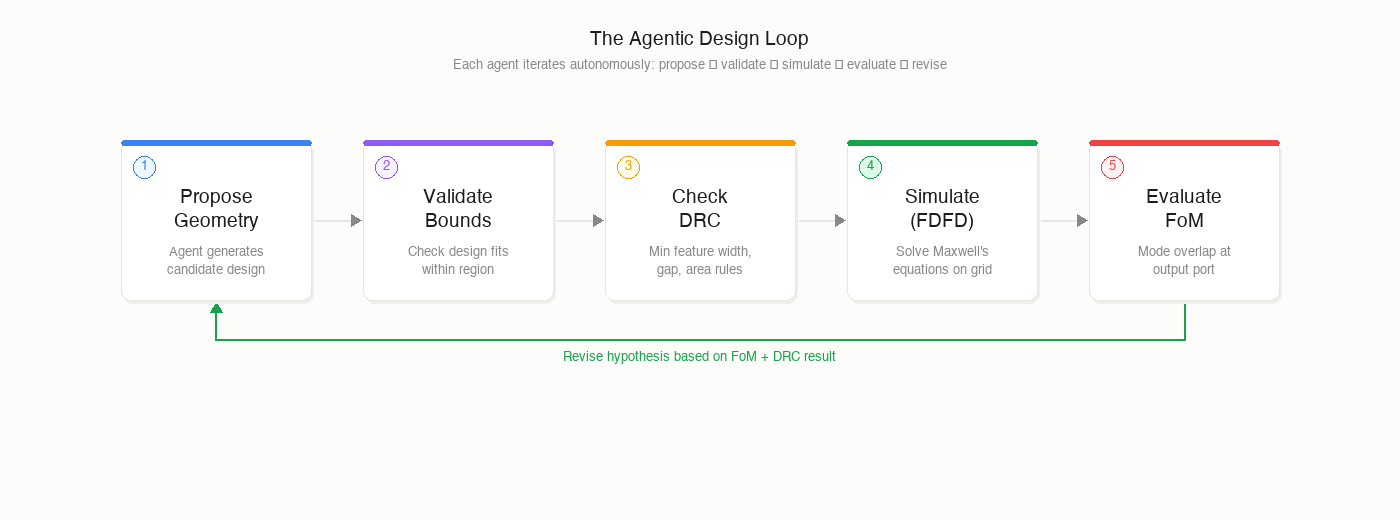
AI Agents Autonomously Design Photonic Chips, Revolutionizing Optical Computing
AI agents successfully designed photonic components autonomously, meeting performance and fabrication criteria.

AlphaCNOT: Quantum Gate Optimization with Model-Based Reinforcement Learning
AlphaCNOT reduces quantum CNOT gate counts by up to 32% using model-based RL.

Knowledge Density, Not Task Format, Drives MLLM Scaling
Knowledge density, not task diversity, is key to MLLM scaling.

Lossless Prompt Compression Reduces LLM Costs by Up to 80%
Dictionary-encoding enables lossless prompt compression, reducing LLM costs by up to 80% without fine-tuning.

Weight Patching Advances Mechanistic Interpretability in LLMs
Weight Patching localizes LLM capabilities to specific parameters.