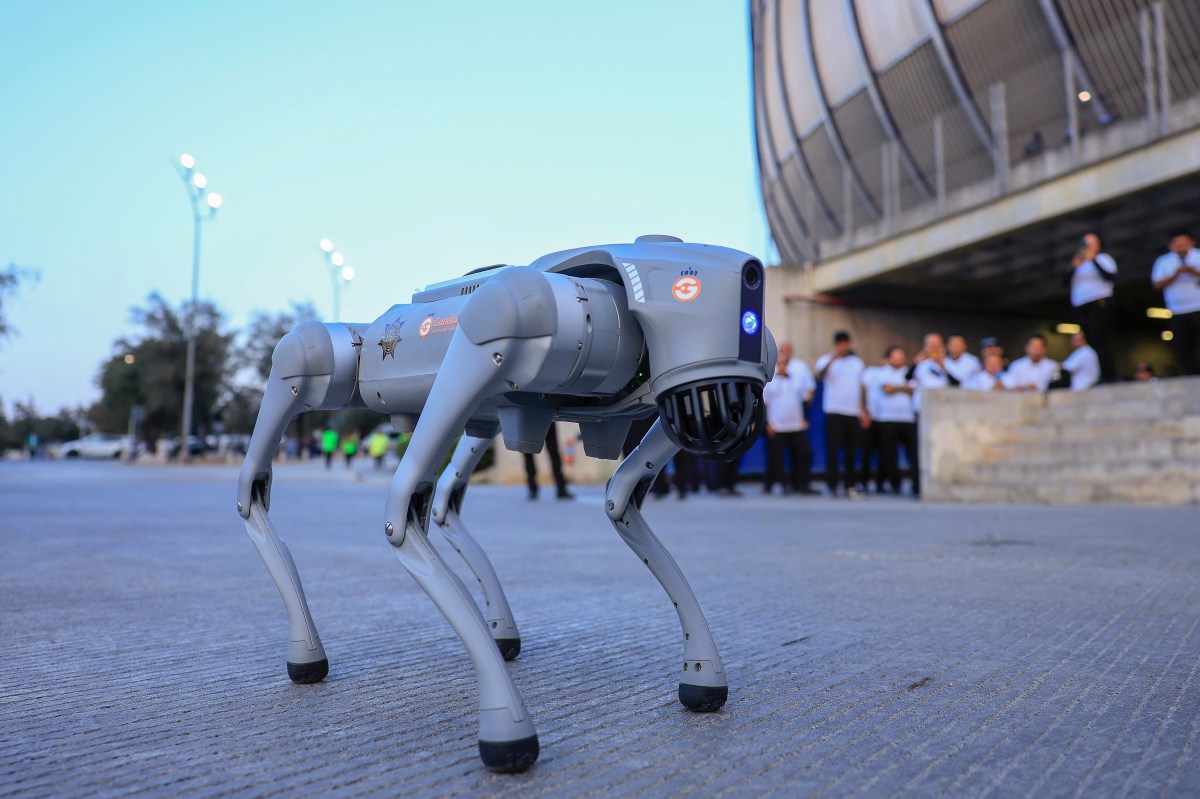
AI-Powered Robot Dogs Deployed in Atlanta Spark Surveillance Debate
Sonic Intelligence
The Gist
AI-powered robot dogs are patrolling Atlanta, raising both security hopes and civil liberty concerns.
Explain Like I'm Five
"Imagine a robot dog walking around your neighborhood with cameras, watching everything. Some people think it's good because it helps stop bad guys and keeps places safe without needing lots of human guards. But other people worry that it's always watching everyone, even good people, and that feels a bit like a scary movie where robots are everywhere."
Deep Intelligence Analysis
Two key players, Undaunted and Cobalt Robotics, are at the forefront of this deployment, supplying units equipped with high-definition cameras, 360° video streaming, advanced object recognition, thermal imaging, and communication features. While proponents, including Atlanta Police Chief Mark Callahan, emphasize the cost-effectiveness and 24/7 operational capacity for deterring criminal activity in high-crime areas, critics like the ACLU of Georgia warn of a dangerous path towards a dystopian future. Their concerns center on the normalization of constant surveillance, the potential for algorithmic bias, and the broader implications for privacy and individual freedoms within public spaces.
Looking forward, Atlanta's initiative serves as a crucial test case for the widespread adoption of autonomous policing technologies. The success or failure of these robot dog deployments, both in terms of crime reduction and public acceptance, will heavily influence similar programs globally. The ongoing debate will necessitate robust policy frameworks and ethical guidelines to balance technological innovation with fundamental human rights, ultimately shaping the future of urban security and the definition of privacy in an increasingly automated world.
Impact Assessment
The deployment of AI-powered robot dogs by law enforcement represents a significant escalation in automated surveillance and policing. This development raises critical questions about the balance between public safety, civil liberties, and the ethical implications of autonomous technology in urban environments, setting a precedent for future integrations.
Read Full Story on NewsweekKey Details
- ● AI-powered robot dogs are patrolling Atlanta streets, apartments, parking lots, and construction sites.
- ● Companies like Undaunted deploy these robots for surveillance, streaming 360° video to remote operators 24/7.
- ● Cobalt Robotics supplies autonomous canine units (Hound Units) to Atlanta police for high-crime areas.
- ● Robots are equipped with HD cameras, object recognition, thermal imaging, lights, sirens, and speakers.
- ● ACLU of Georgia criticizes the deployment, citing concerns about surveillance and civil liberties.
Optimistic Outlook
The deployment of robot dogs could significantly enhance public safety by providing continuous, cost-effective surveillance and deterring crime in high-risk areas. Their advanced sensors and 24/7 operation could lead to more efficient resource allocation for human officers and a measurable reduction in certain types of criminal activity, improving overall urban security.
Pessimistic Outlook
The increasing use of autonomous surveillance robots by law enforcement poses substantial risks to civil liberties and privacy. Concerns include potential for algorithmic bias in object recognition, the normalization of constant monitoring, and the erosion of public trust, leading to a more dystopian urban environment where citizens feel perpetually observed and controlled.

The Signal, Not
the Noise|
Join AI leaders weekly.
Unsubscribe anytime. No spam, ever.
Generated Related Signals

Bio-Inspired ATI Architecture Boosts Physical AI Efficiency
New bio-inspired architecture dramatically improves physical AI performance.

Physical Intelligence Unveils Robot Brain Capable of Untaught Tasks
Physical Intelligence's new model enables robots to perform novel, untaught tasks.
Robotics Moves Beyond 'Theory of Mind' for Social AI
A new perspective challenges the dominant 'Theory of Mind' paradigm in social robotics.

Knowledge Density, Not Task Format, Drives MLLM Scaling
Knowledge density, not task diversity, is key to MLLM scaling.

Lossless Prompt Compression Reduces LLM Costs by Up to 80%
Dictionary-encoding enables lossless prompt compression, reducing LLM costs by up to 80% without fine-tuning.

Weight Patching Advances Mechanistic Interpretability in LLMs
Weight Patching localizes LLM capabilities to specific parameters.