
Physical Intelligence Unveils Robot Brain Capable of Untaught Tasks
Sonic Intelligence
The Gist
Physical Intelligence's new model enables robots to perform novel, untaught tasks.
Explain Like I'm Five
"Imagine a toy robot that usually only knows how to pick up a red block. Now, this new smart robot brain lets it figure out how to pick up a blue ball, even if no one ever taught it how to pick up a ball before, just by you telling it what to do! It can even learn to use a kitchen gadget it barely saw before."
Deep Intelligence Analysis
Physical Intelligence, a two-year-old startup, has published research highlighting π0.7's capability to combine learned skills from different contexts to solve unfamiliar problems. A compelling demonstration involved a robot successfully operating an air fryer, an appliance it had virtually no direct training data for, by synthesizing limited prior interactions and broader web-based pretraining. This contrasts sharply with previous methods requiring extensive, task-specific data collection. Sergey Levine, a co-founder, notes that capabilities are scaling "more than linearly" with data, a favorable property observed in language and vision domains, indicating potential for rapid future progress.
The implications for industrial and service robotics are profound. Real-time coaching and adaptation without retraining could dramatically reduce deployment costs and expand the operational scope of robots in unstructured environments. However, challenges remain, including the difficulty in tracing the model's knowledge sources and the impact of prompt engineering on success rates, as highlighted by researcher Ashwin Balakrishna. While promising, the path to robust, deployable general-purpose robots will require addressing these complexities to ensure reliability and safety in diverse, real-world applications.
[EU AI Act Art. 50 Compliant: This analysis is based on publicly available information and does not involve the processing of personal data or the deployment of high-risk AI systems. Transparency and explainability principles are adhered to by clearly stating the source of information and the analytical methodology.]
Visual Intelligence
flowchart LR
    A["Traditional Training"] --> B["Rote Memorization"];
    B --> C["Task Specific"];
    C --> D["Limited Adapt"];
    E["π0.7 Model"] --> F["Combine Skills"];
    F --> G["New Tasks"];
    G --> H["Human Coach"];
    D -- "Shift" --> E;
    F -- "Enables" --> G;
Auto-generated diagram · AI-interpreted flow
Impact Assessment
This breakthrough in compositional generalization could mark a significant inflection point for robotics, akin to the impact of large language models on NLP. It moves beyond rote memorization, enabling robots to adapt to novel situations and learn from human instruction in real-time. This capability is crucial for deploying versatile robots in unstructured environments, accelerating the path to general-purpose robotic AI.
Read Full Story on TechCrunchKey Details
- ● Physical Intelligence is a two-year-old robotics startup based in San Francisco.
- ● Their new model, π0.7, demonstrates compositional generalization.
- ● This model allows robots to combine learned skills to solve problems not explicitly trained on.
- ● It can be coached through unfamiliar tasks using plain language.
- ● A key demonstration involved a robot successfully using an air fryer with minimal prior training data.
Optimistic Outlook
The π0.7 model's ability to generalize and learn from natural language coaching promises to unlock unprecedented flexibility for robotic systems. This could lead to faster deployment, reduced training costs, and robots capable of performing a wider array of complex tasks in dynamic human environments. The "more than linear" scaling property suggests rapid future advancements, potentially revolutionizing industries from manufacturing to service.
Pessimistic Outlook
Despite promising demonstrations, the model's current limitations, including the difficulty in tracking knowledge sources and potential prompt engineering challenges, indicate significant hurdles remain for robust real-world deployment. Over-reliance on such early-stage generalization capabilities could lead to unpredictable failures in critical applications. The "black box" nature of advanced AI models also raises concerns about debugging and ensuring safety in complex robotic interactions.

The Signal, Not
the Noise|
Join AI leaders weekly.
Unsubscribe anytime. No spam, ever.
Generated Related Signals
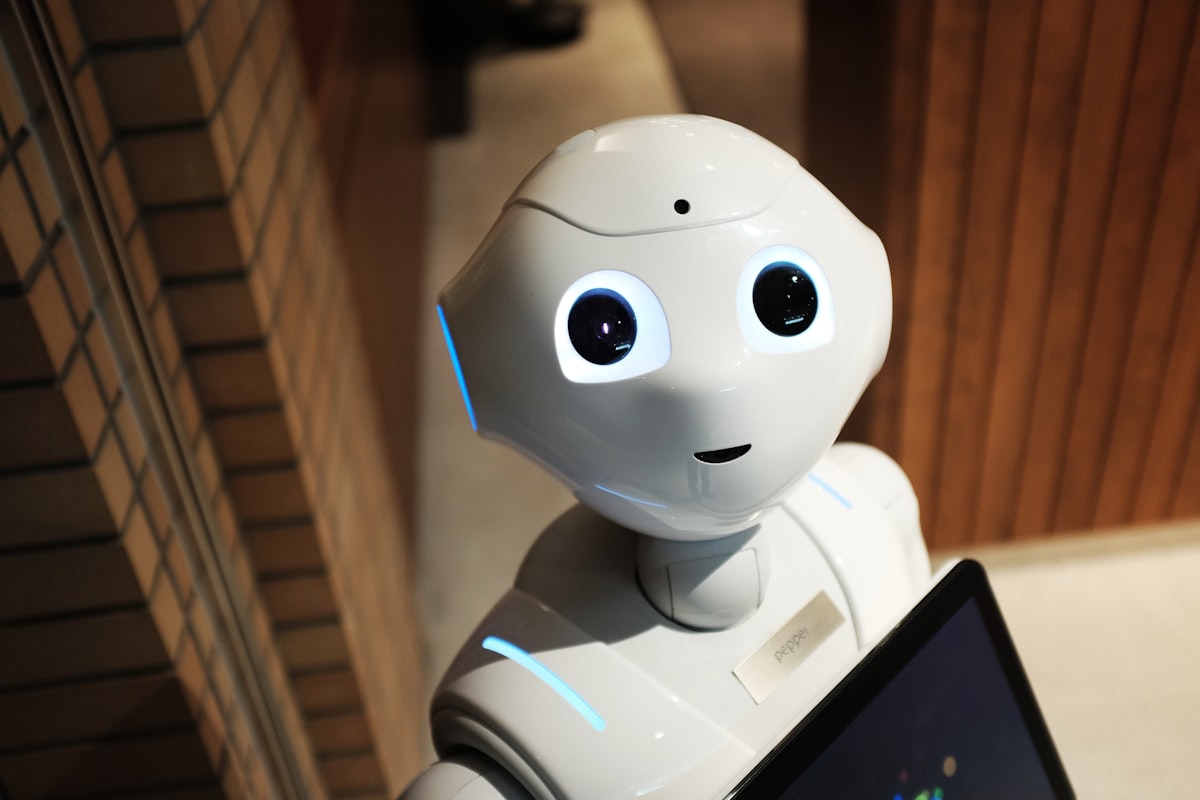
Bio-Inspired ATI Architecture Boosts Physical AI Efficiency
New bio-inspired architecture dramatically improves physical AI performance.
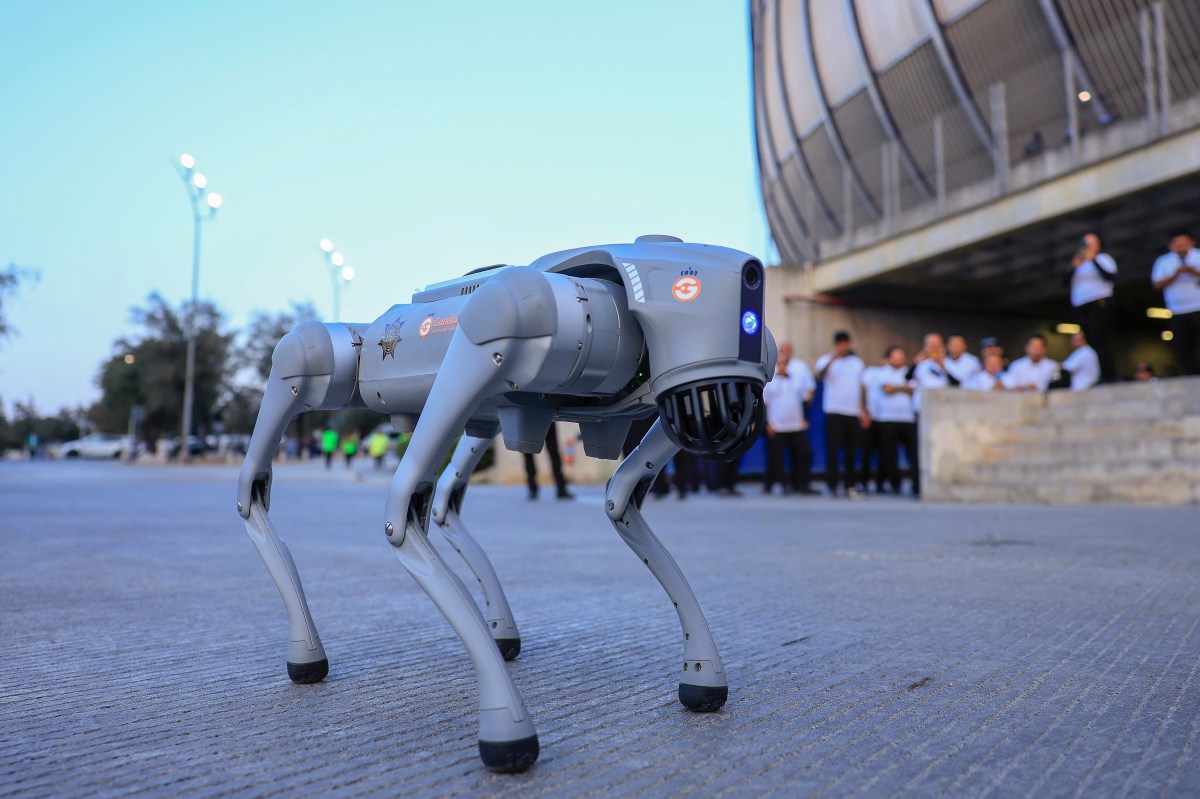
AI-Powered Robot Dogs Deployed in Atlanta Spark Surveillance Debate
AI-powered robot dogs are patrolling Atlanta, raising both security hopes and civil liberty concerns.
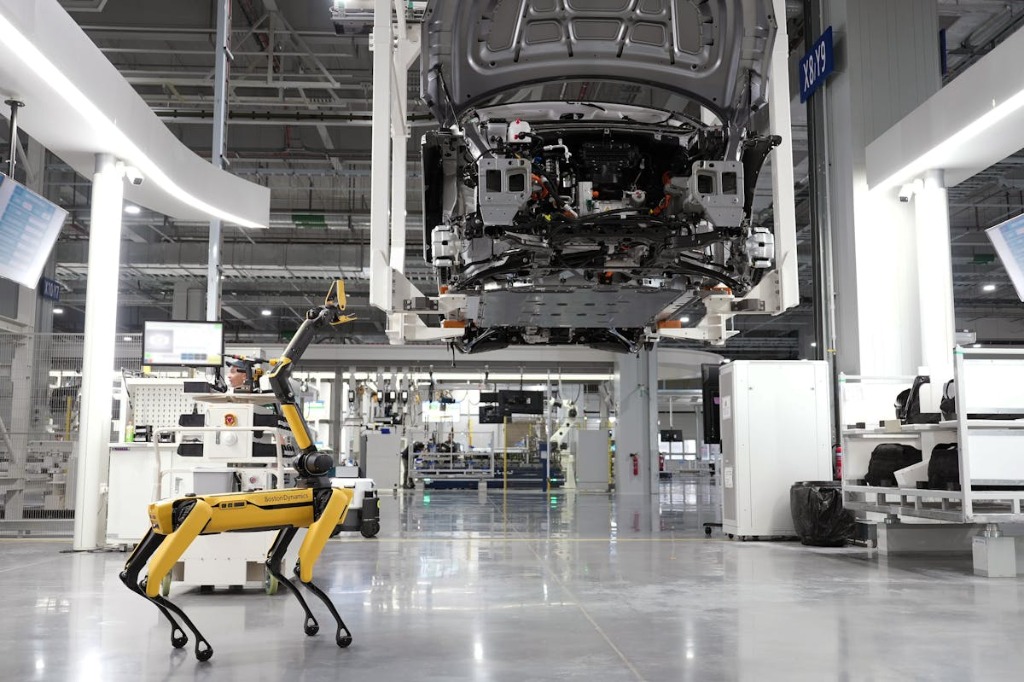
Robotics Moves Beyond 'Theory of Mind' for Social AI
A new perspective challenges the dominant 'Theory of Mind' paradigm in social robotics.

Knowledge Density, Not Task Format, Drives MLLM Scaling
Knowledge density, not task diversity, is key to MLLM scaling.

Lossless Prompt Compression Reduces LLM Costs by Up to 80%
Dictionary-encoding enables lossless prompt compression, reducing LLM costs by up to 80% without fine-tuning.

Weight Patching Advances Mechanistic Interpretability in LLMs
Weight Patching localizes LLM capabilities to specific parameters.