
Bio-Inspired ATI Architecture Boosts Physical AI Efficiency
Sonic Intelligence
The Gist
New bio-inspired architecture dramatically improves physical AI performance.
Explain Like I'm Five
"Imagine a robot brain that works like yours, with different parts for quick reflexes, learning how to see, and deep thinking. This new 'robot brain' design helps robots see much better and think smarter without always needing to ask a super-computer for help."
Deep Intelligence Analysis
ATI's tripartite systems-level organization—comprising a Brainstem (L1) for reflexive safety, a Cerebellum (L2) for continuous sensor calibration, and a Cerebral Inference Subsystem (L3/L4) for skill execution and deep reasoning—enables a closed-loop architecture where sensor control, adaptive sensing, and inference co-evolve. This modularity is crucial for keeping time-critical sensing and control functions localized on the device, invoking higher-level, potentially cloud-based, inference only when necessary. Empirical validation in a mobile camera prototype demonstrated substantial gains, improving end-to-end accuracy from 53.8% to 88% and reducing remote L4 invocations by 43.3%, showcasing the tangible benefits of co-designing sensing and inference.
These findings suggest a strategic reorientation for the development of embodied AI, moving beyond simply increasing model size to focus on integrated system design that optimizes for physical interaction and real-time constraints. The ATI framework offers a practical path toward deployable, high-performance physical AI, enabling more sophisticated and reliable autonomous agents in diverse applications, from industrial robotics to advanced wearables. This architectural innovation could fundamentally reshape the competitive landscape for hardware and software developers in the burgeoning physical AI market.
Visual Intelligence
flowchart LR
    A["Physical AI"] --> B["Artificial Tripartite Intelligence"];
    B --> C["Brainstem L1 Safety"];
    B --> D["Cerebellum L2 Calibration"];
    B --> E["Cerebral L3/L4 Inference"];
    C & D --> F["Adaptive Sensing"];
    E --> G["Edge Cloud Inference"];
    F --> A;
    G --> A;
Auto-generated diagram · AI-interpreted flow
Impact Assessment
As AI moves into physical domains like robotics and wearables, traditional scaling methods falter under real-world constraints. ATI offers a foundational architectural shift, prioritizing efficient, on-device sensing and control, critical for robust and autonomous physical AI.
Read Full Story on ArXiv cs.AIKey Details
- ● Artificial Tripartite Intelligence (ATI) is a bio-inspired, sensor-first architecture for physical AI.
- ● ATI features a three-level system: Brainstem (L1), Cerebellum (L2), and Cerebral Inference Subsystem (L3/L4).
- ● A mobile camera prototype using ATI improved end-to-end accuracy from 53.8% to 88%.
- ● The prototype reduced remote L4 invocations (higher-level inference) by 43.3%.
- ● The architecture aims to keep time-critical sensing and control on-device.
Optimistic Outlook
ATI's modular, sensor-first design promises more reliable, energy-efficient, and responsive physical AI systems. This could unlock widespread deployment of intelligent robots and wearables in safety-critical and resource-constrained environments.
Pessimistic Outlook
Implementing complex bio-inspired architectures like ATI could introduce significant engineering challenges and increase development costs. The reliance on specific hardware co-design might also limit its immediate widespread adoption across diverse physical AI platforms.

The Signal, Not
the Noise|
Join AI leaders weekly.
Unsubscribe anytime. No spam, ever.
Generated Related Signals

Physical Intelligence Unveils Robot Brain Capable of Untaught Tasks
Physical Intelligence's new model enables robots to perform novel, untaught tasks.
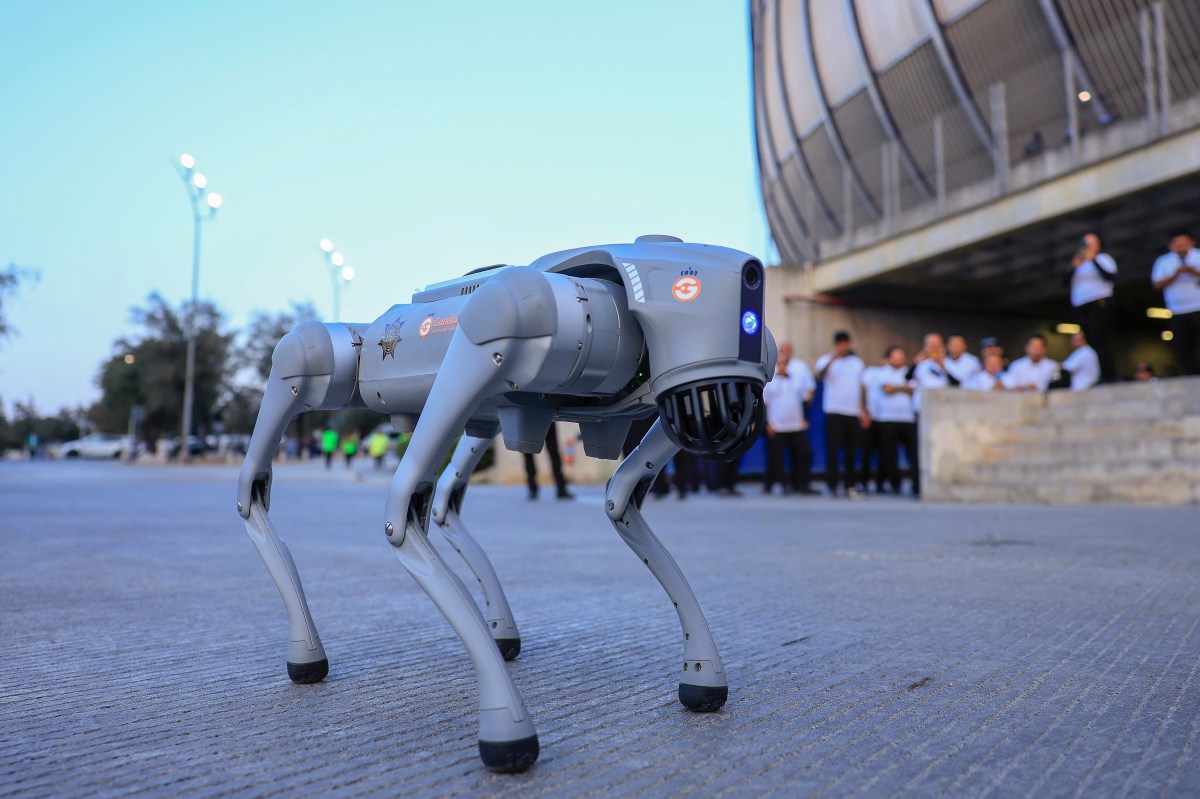
AI-Powered Robot Dogs Deployed in Atlanta Spark Surveillance Debate
AI-powered robot dogs are patrolling Atlanta, raising both security hopes and civil liberty concerns.

Robotics Moves Beyond 'Theory of Mind' for Social AI
A new perspective challenges the dominant 'Theory of Mind' paradigm in social robotics.

Knowledge Density, Not Task Format, Drives MLLM Scaling
Knowledge density, not task diversity, is key to MLLM scaling.

Lossless Prompt Compression Reduces LLM Costs by Up to 80%
Dictionary-encoding enables lossless prompt compression, reducing LLM costs by up to 80% without fine-tuning.

Weight Patching Advances Mechanistic Interpretability in LLMs
Weight Patching localizes LLM capabilities to specific parameters.