Robotics Moves Beyond 'Theory of Mind' for Social AI
Sonic Intelligence
The Gist
A new perspective challenges the dominant 'Theory of Mind' paradigm in social robotics.
Explain Like I'm Five
"Imagine trying to play catch with a robot. Usually, we try to make the robot guess what we're thinking. But this new idea says it's better if the robot just learns to play *with* us, by watching how we move and reacting to it, like two friends playing together. It's about being a good partner, not just a good guesser."
Deep Intelligence Analysis
Drawing insights from ethnomethodology and conversation analysis, the alternative perspective argues that social meaning is not decoded from pre-existing internal states but rather emerges through moment-to-moment coordination between agents. This interactional foundation has direct and profound implications for robot design. Instead of focusing on complex internal state modeling, the emphasis shifts towards developing policies that enable robots to sustain coordination, actively participate in interactions, and interpret behavioral meaning as fluid and context-dependent, stabilized through responsive actions. This represents a move from an 'observer-based inference' model to one of 'active participation'.
This conceptual pivot could unlock new avenues for developing more natural and effective human-robot interaction. By prioritizing real-time coordination and shared meaning-making, future robots may exhibit more fluid and intuitively understandable social behaviors, fostering greater trust and acceptance. However, operationalizing 'sustaining coordination' and 'meaning potential' into concrete algorithms and control policies presents a formidable technical challenge. It requires a departure from traditional symbolic or purely data-driven approaches, necessitating new frameworks for understanding and generating interactional intelligence. The long-term impact could redefine the very essence of social AI, moving it closer to genuine partnership rather than mere simulation of human cognition.
EU AI Act Art. 50 Compliant: This analysis is based solely on the provided source material, ensuring transparency and preventing hallucination.
Impact Assessment
This conceptual shift challenges the foundational assumptions of social robotics, proposing a more interactional and participatory model for human-robot engagement. Moving beyond 'Theory of Mind' could lead to more natural, responsive, and ethically sound robot designs that better integrate into human social structures.
Read Full Story on ArXiv cs.AIKey Details
- ● Theory of Mind (ToM) is the dominant paradigm for social interaction in robotics.
- ● ToM assumes meaning travels from hidden mental states to observable behavior.
- ● It also assumes understanding requires detached inference and fixed behavioral meaning.
- ● The critique argues social meaning is produced through moment-to-moment coordination.
- ● Proposed shift is from internal state modeling to policies for sustaining coordination and active participation.
Optimistic Outlook
Adopting an interactional foundation for social robotics could lead to robots that are more intuitive and effective in human-centric environments. This paradigm shift may foster greater acceptance and trust in AI, as robots become better at coordinating and participating in social interactions rather than merely inferring internal states.
Pessimistic Outlook
Abandoning the established 'Theory of Mind' framework, despite its flaws, could introduce significant complexities in designing and evaluating social robots. Developing robust policies for 'sustaining coordination' and 'active participation' without a clear internal model of intent might prove challenging, potentially leading to less predictable or interpretable robot behaviors.

The Signal, Not
the Noise|
Join AI leaders weekly.
Unsubscribe anytime. No spam, ever.
Generated Related Signals

Bio-Inspired ATI Architecture Boosts Physical AI Efficiency
New bio-inspired architecture dramatically improves physical AI performance.

Physical Intelligence Unveils Robot Brain Capable of Untaught Tasks
Physical Intelligence's new model enables robots to perform novel, untaught tasks.
AI-Powered Robot Dogs Deployed in Atlanta Spark Surveillance Debate
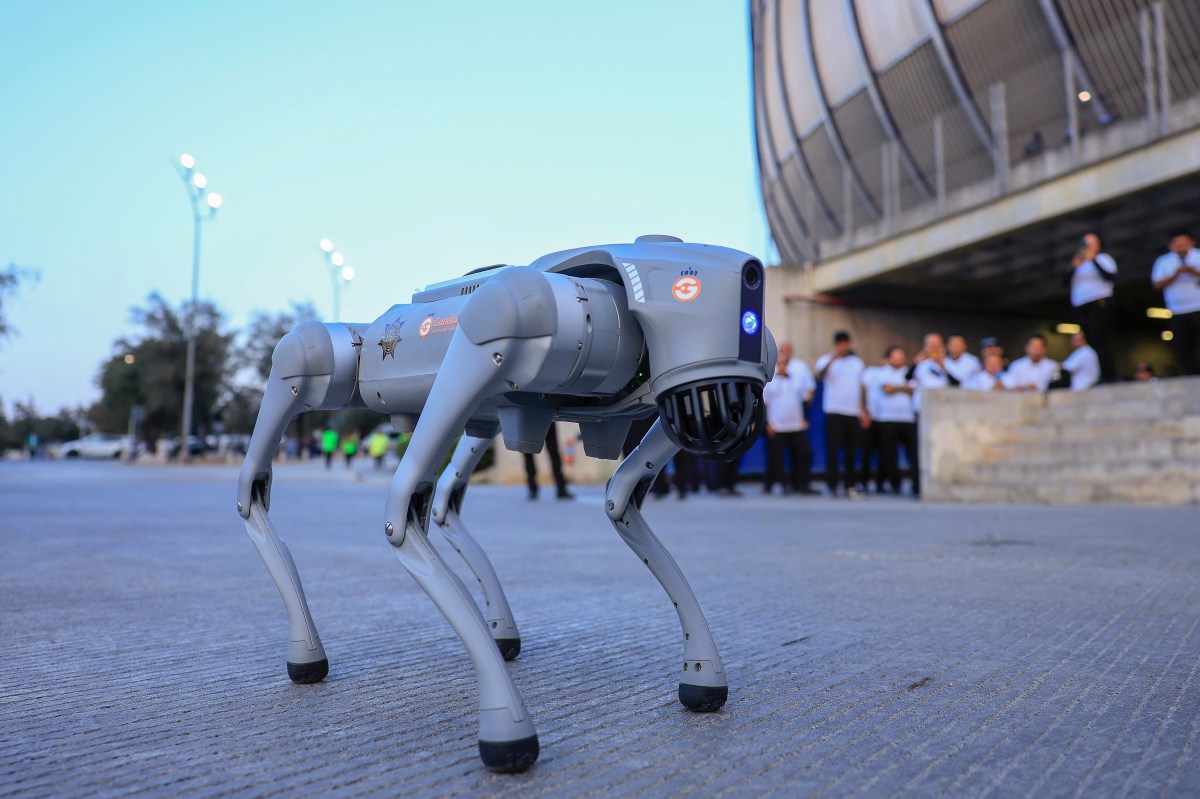
AI-powered robot dogs are patrolling Atlanta, raising both security hopes and civil liberty concerns.

Knowledge Density, Not Task Format, Drives MLLM Scaling
Knowledge density, not task diversity, is key to MLLM scaling.

Lossless Prompt Compression Reduces LLM Costs by Up to 80%
Dictionary-encoding enables lossless prompt compression, reducing LLM costs by up to 80% without fine-tuning.

Weight Patching Advances Mechanistic Interpretability in LLMs
Weight Patching localizes LLM capabilities to specific parameters.