Cognition's Devin: The AI Engineer Reshaping Software Development
Sonic Intelligence
Cognition's AI agent Devin, valued at over $10 billion, is redefining software engineering.
Explain Like I'm Five
"Imagine having a super-smart robot friend named Devin who can write computer programs all by itself, from start to finish. This company, Cognition, made Devin, and now super-rich investors are giving them lots of money because they think Devin will change how we make apps and games. Some people are excited because it means more cool software, but others worry if human coders will still have jobs."
Deep Intelligence Analysis
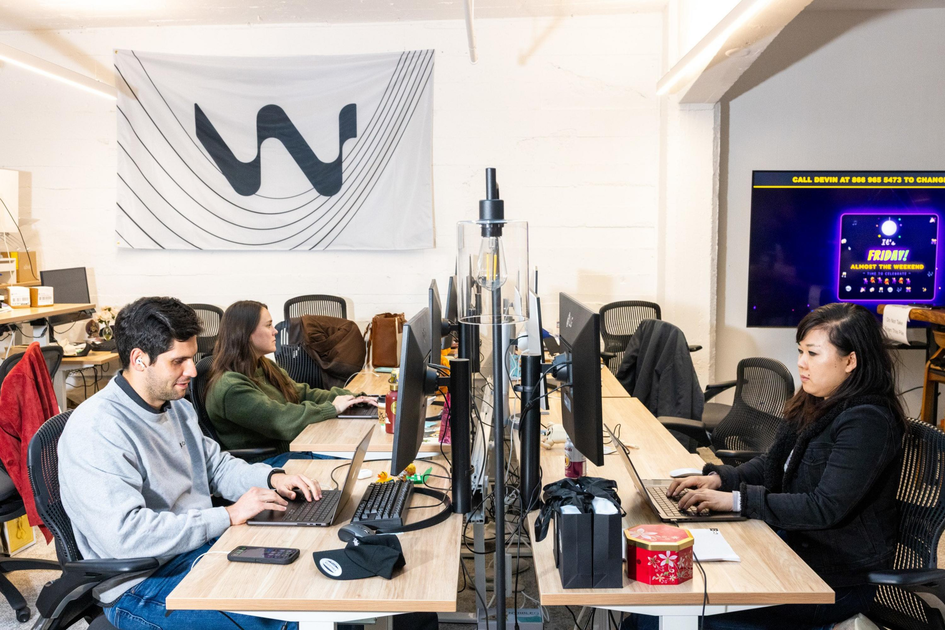
Cognition's market validation underscores the strategic importance of this technology. The company, a two-year-old startup, recently secured a substantial $400 million funding round led by Peter Thiel’s Founders Fund, propelling its valuation beyond $10 billion. This capital injection and rapid growth, from 40 to over 200 employees following the acquisition of Windsurf, highlight aggressive expansion and market confidence. However, Cognition operates within an increasingly competitive landscape, facing established and emerging rivals such as Cursor, Anthropic's Claude Code, and OpenAI's Codex, all vying for dominance in the AI coding sector. The underlying technical architecture, leveraging a combination of major foundation models and Cognition's proprietary technology, is crucial to Devin's evolving capabilities.
The forward-looking implications are profound, sparking a critical debate within the tech community. CEO Scott Wu posits a future of software abundance, where AI agents empower human engineers to focus on higher-order creative problem-solving by offloading grunt work. Conversely, many rank-and-file engineers express apprehension, fearing widespread job displacement as tasks once requiring days are now completed in minutes by machines. This tension between augmentation and obsolescence will define the next phase of software engineering. The ultimate impact will likely involve a redefinition of engineering roles, emphasizing strategic oversight, architectural design, and complex problem-solving, rather than the elimination of human input altogether, thereby reshaping the talent pipeline and educational requirements for the industry.
Impact Assessment
The emergence of autonomous AI software engineers like Devin represents a pivotal shift in development paradigms, promising to lower barriers to software creation. This innovation simultaneously fuels a critical debate on the future of human engineers, balancing potential productivity gains against concerns of job displacement.
Key Details
- Cognition launched Devin 1.0 in 2024.
- The company secured a $400 million funding round led by Peter Thiel’s Founders Fund.
- This funding round valued Cognition at more than $10 billion.
- Cognition expanded from 40 employees to over 200 after acquiring Windsurf.
- CEO Scott Wu holds three gold medals from the International Olympiad in Informatics.
Optimistic Outlook
The advent of AI software engineers such as Devin promises an era of unprecedented software abundance, enabling rapid ideation and product realization. This shift could liberate human engineers from repetitive tasks, allowing them to concentrate on complex problem-solving and creative design, thereby accelerating innovation across all sectors.
Pessimistic Outlook
The increasing sophistication of AI coding tools, exemplified by Devin, intensifies anxieties regarding widespread job displacement for traditional software engineers. This technological acceleration could necessitate rapid, large-scale reskilling initiatives, potentially leading to significant workforce disruption and economic uncertainty within the tech industry.
Get the next signal in your inbox.
One concise weekly briefing with direct source links, fast analysis, and no inbox clutter.
More reporting around this signal.
Related coverage selected to keep the thread going without dropping you into another card wall.