
OpenAI Advocates Four-Day Work Week for AI Era Adaptation
Sonic Intelligence
The Gist
OpenAI proposes a four-day work week to adapt to AI-driven labor shifts.
Explain Like I'm Five
"Imagine if robots start doing a lot of grown-up jobs. OpenAI, the company that made ChatGPT, thinks grown-ups might not need to work as many days, like maybe only four days a week, so they have more time for other things, and everyone still gets paid fairly. They want to make sure everyone is happy and has good jobs even when robots help a lot."
Deep Intelligence Analysis
The core of OpenAI's recommendations centers on "durable improvements in workers' benefits," specifically piloting four-day work weeks without pay reduction, alongside increased retirement contributions, healthcare coverage, and childcare subsidies. These suggestions are predicated on the expectation that AI will soon handle projects currently requiring months of human labor, echoing warnings from figures like Bank of England governor Andrew Bailey about potential job displacement mirroring the Industrial Revolution. This proactive stance is not unique, as rival Anthropic has also proposed similar ideas, including a "public wealth fund" to distribute AI-driven economic growth, highlighting a nascent consensus among some AI leaders regarding the need for new economic models.
The forward-looking implications are substantial. If adopted, these policies could redefine the global labor landscape, potentially leading to a more equitable distribution of AI's productivity gains and fostering a society where human creativity and care-oriented roles are prioritized. However, the feasibility and economic impact of such widespread changes remain subjects of intense debate, with some economists cautioning that AI's transformative effects on jobs and productivity may materialize much slower than tech firms predict. The success of these proposals will depend on overcoming significant corporate resistance and effectively navigating complex economic transitions, ultimately determining whether the "Intelligence Age" leads to widespread prosperity or exacerbates existing inequalities.
_Context: This intelligence report was compiled by the DailyAIWire Strategy Engine. Verified for Art. 50 Compliance._
Impact Assessment
OpenAI, a leading AI developer, is actively proposing societal adjustments to mitigate potential job displacement and economic disruption caused by advanced AI, signaling a proactive approach to AI's broader impact beyond just technological development. These proposals could influence future labor policies and corporate strategies.
Read Full Story on BBC NewsKey Details
- ● OpenAI's 'Industrial Policy for the Intelligence Age' report suggests policy proposals.
- ● Proposals include trialing four-day work weeks with no loss in pay.
- ● Other suggestions: increased retirement contributions, healthcare coverage, childcare subsidies.
- ● OpenAI expects AI systems to complete projects currently taking months.
- ● Bank of England governor Andrew Bailey compared AI displacement to the Industrial Revolution.
- ● Rival firm Anthropic also proposed similar policy ideas like a 'public wealth fund'.
Optimistic Outlook
Implementing policies like a four-day work week could lead to improved work-life balance, increased worker well-being, and potentially higher productivity as AI handles more routine tasks. This could foster a more equitable distribution of AI's economic benefits and create new human-centric job opportunities.
Pessimistic Outlook
Such proposals might face significant resistance from businesses due to perceived cost increases and logistical challenges. If not managed carefully, AI-driven job displacement could exacerbate economic inequality, leading to social unrest if benefits are not broadly shared or new opportunities fail to materialize quickly enough.

The Signal, Not
the Noise|
Join AI leaders weekly.
Unsubscribe anytime. No spam, ever.
Generated Related Signals

Economists Urge 'Manhattan Project' for AI Job Impact Data
Current AI job impact predictions are flawed, necessitating new data collection.
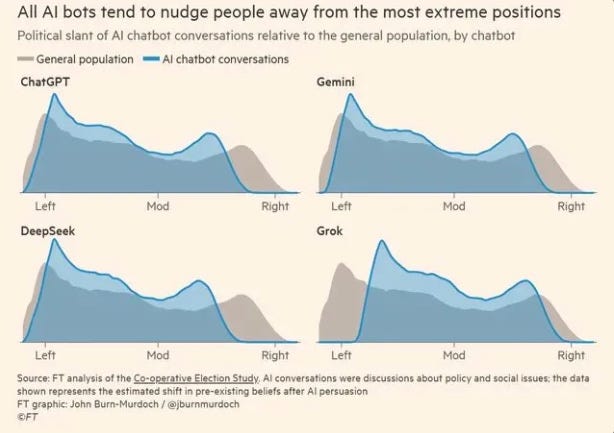
AI's Political Leanings: Study Debunked on Moderating Extremes
A widely shared study claiming AI moderates political extremes faces significant methodological scrutiny.

AI's Homogenizing Effect: Eroding Original Thought in Higher Education
AI chatbots are homogenizing student expression and critical thinking in university settings.
Specialized AI Agents Outperform General LLMs for CI/CD Diagnostics
Specialized AI agents, even with identical LLMs, achieve superior performance by optimizing context, tools, and data for...

AI Agent Guardrails: Pre-LLM and Post-LLM Strategies for Reliability
Implementing real-time guardrails before and after LLM interaction is crucial for AI agent reliability and safety.
Takt AI: Socially Intelligent Agent Learns Group Dynamics
Takt is a new AI designed to participate in group chats with social intelligence and dynamic interaction.